About Turbine Driven ICU Ventilator
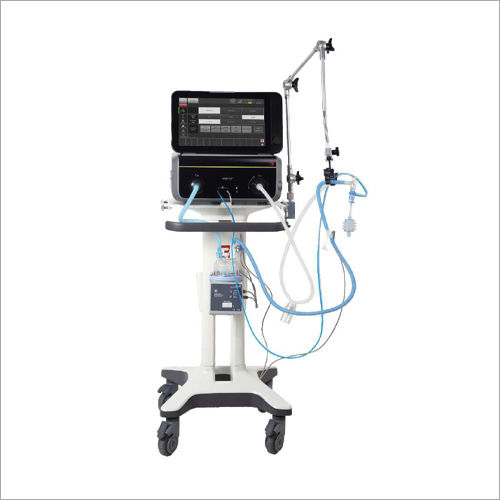
Turbine Driven Ventilator extracts the air from the room and pushes it into a small air chamber where the air outlet is connected to the patient air circuit through valves that are controlled by electric actuators. The electric actuators are controlled by the parameter settings made by the ventilator operator. The Turbine Driven Ventilator is the latest technology ventilator that is robust in nature and has some manufacturing and user-friendly features. This is less prone to maintenance and service issues. The majority of the new firms are using technology based on turbines.
Advanced Ventilation FlexibilityDesigned to cater to adult, pediatric, and neonatal patients, this ventilator offers multiple advanced modes: VCV, PCV, S/T, SIMV, PSV, CPAP, APRV, and NIV. Its flexibility allows tailored therapy for a wide patient population, supporting both invasive and non-invasive respiratory support efficiently.
Durable Turbine and High MobilityWith a turbine life exceeding 20,000 operational hours, this device ensures long-term reliability. Its turbine-driven mechanism eliminates dependency on external compressed air, making it highly portable and suitable for intensive care scenarios, emergency wards, and creative setups requiring quick relocation.
User-Centric Safety and ControlsFeaturing a 10.4-inch TFT color touch screen and multiple built-in alarms for vital safety parameters, this ventilator prioritizes effective control and monitoring. It supports external humidification, adjustable PEEP, FiO2, and tidal volume, ensuring adaptable therapy for diverse patient requirements while maintaining high safety standards.
FAQ's of Turbine Driven ICU Ventilator:
Q: How does the turbine-driven ICU ventilator function without external compressed air?
A: This ventilator uses an integrated turbine system that generates airflow internally, removing the need for an external compressed air supply. This design enhances portability and is ideal for critical care environments where mobility and rapid deployment are essential.
Q: What patient types can this ventilator support, and how are ventilation modes selected?
A: The device is suitable for adults, pediatric, and neonatal patients. Clinicians can choose from various ventilation modes-such as Volume Control, Pressure Control, S/T, SIMV, PSV, CPAP, APRV, and Non-invasive ventilation-via the intuitive touch screen, allowing precise customization based on each patient's respiratory needs.
Q: When should this ventilator be used in a clinical setting?
A: This ICU ventilator is ideal for acute and chronic respiratory failure, as well as for general respiratory support in ICUs, emergency wards, and hospitals. Its multiple safety alarms and robust backup battery make it reliable during emergencies, power outages, and patient transfers within healthcare facilities.
Q: Where can this ventilator be effectively deployed?
A: Owing to its mobility, durable turbine, and comprehensive safety features, the ventilator is best suited for use in intensive care units, emergency departments, critical care transport, and hospital wards requiring advanced respiratory support.
Q: What is the process for adjusting ventilation parameters and alarms?
A: Clinical staff can set parameters such as tidal volume, PEEP, frequency, FiO2, trigger sensitivity, and pressure from the user-friendly 10.4-inch touchscreen interface. Built-in alarms notify staff of apnea, pressure deviations, power failures, and other critical events, ensuring prompt attention and action.
Q: How does the backup battery benefit clinical workflow during power outages?
A: The built-in rechargeable battery provides up to three hours of uninterrupted operation, ensuring that patient care is not compromised during mains power failures or when transferring patients between departments or during transport.
 Send Inquiry


 Send Inquiry


 Send Inquiry